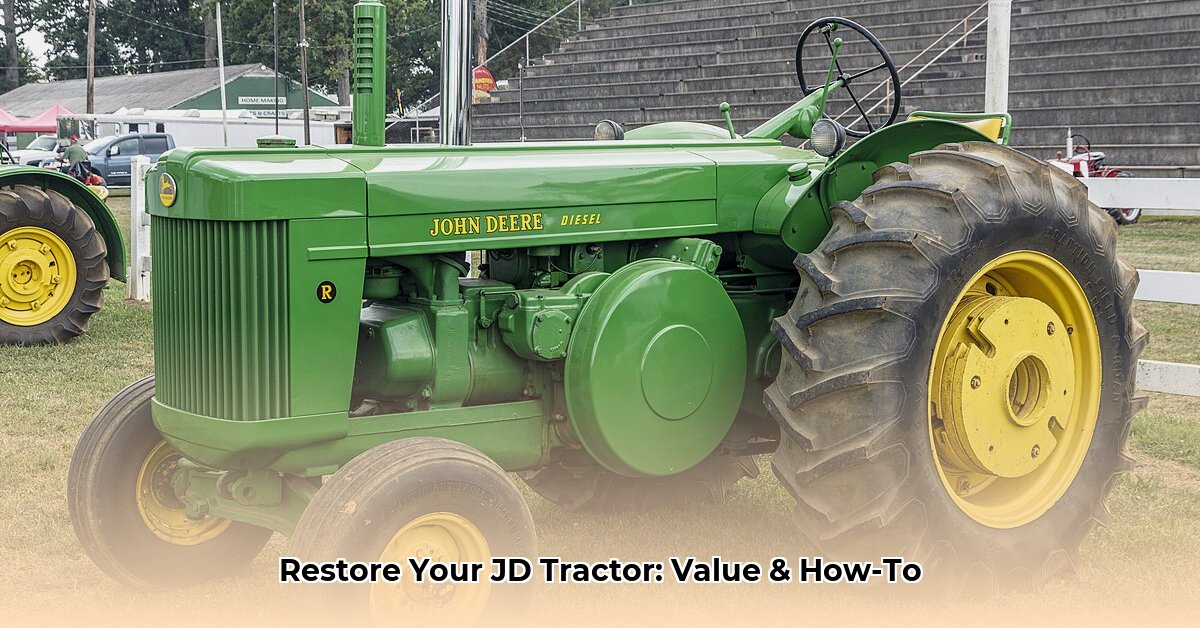
The John Deere R tractor, a stalwart of mid-20th-century agriculture, is more than just a machine; it's a piece of history, a testament to engineering ingenuity, and a rewarding project for collectors. This guide provides a comprehensive overview of restoring, valuing, and collecting these iconic tractors. It's a deep dive for both seasoned enthusiasts and newcomers alike. For more detailed tractor valuation resources, check out Tractor Values.
Unveiling the JD R: Technical Specifications and its Legacy
The John Deere R, produced from 1949 to 1954, revolutionized farming with its powerful 6.8-liter, two-cylinder diesel engine (a remarkable feat for its time). Its five-speed transmission and live power take-off (PTO) – allowing independent operation of implements – significantly improved efficiency and versatility. Approximately 21,293 units were produced, making these tractors relatively common – yet still highly sought after by collectors.
| Specification | Details |
|---|---|
| Engine | 2-cylinder, 6.8-liter diesel |
| Transmission | 5-speed manual |
| PTO | Live (independent of engine speed) |
| Horsepower | Varied based on drawbar and belt horsepower |
| Production Years | 1949-1954 |
This robust design, coupled with its innovative features, cemented the R's place as a significant milestone in agricultural technology.
Decoding the Value: How Much is Your JD R Worth?
Pinpointing the exact value of a JD R tractor requires careful consideration of several key factors. Prices typically range from $4,500 to over $8,250, but specific examples can fall far outside of that range. This wide range necessitates a thorough evaluation.
- Condition: A meticulously preserved tractor, free from significant rust or damage, will command a higher price. The difference between a “barn find” and a neglected tractor is substantial.
- Originality: Tractors retaining all original parts – engine, transmission, bodywork – are highly desirable and fetch premium prices. Aftermarket replacements, even high-quality ones, diminish value.
- Documentation: Original owner's manuals, service records, and other relevant documents add significant value, verifying authenticity and history.
- Location: Regional market dynamics significantly impact value. Demand, and therefore price, varies geographically.
A professional appraisal is highly recommended before buying or selling a JD R tractor. This ensures a realistic valuation based on a comprehensive inspection.
The Art of Restoration: Bringing Your JD R Back to Life
Restoring a John Deere R is a multi-phased endeavor demanding patience, skill, and meticulous planning. This section offers a practical step-by-step approach:
Phase 1: Assessment
- Detailed Documentation: Photograph and document the tractor's condition thoroughly. Identify needed repairs and missing parts.
Phase 2: Parts Acquisition
- Network Effectively: Leverage online forums and collector communities for parts sourcing – these can be invaluable resources.
- Explore Various Channels: Search restoration suppliers, salvage yards, and online marketplaces like eBay.
Phase 3: Strategic Planning & Budgeting
- Prioritization: Create a detailed restoration plan, prioritizing repairs based on urgency and cost-effectiveness.
- Realistic Budgeting: Establish a comprehensive budget, incorporating a contingency for unexpected expenses.
Phase 4: The Restoration
- Thorough Cleaning: Begin with a meticulous cleaning process, removing accumulated dirt, grime, and rust.
- Systematic Repairs: Address each repair systematically, replacing worn or damaged components with original or high-quality replacements.
- Careful Reassembly: Reassemble components carefully, following original specifications or reliable resources.
- Repainting (Optional): Consider repainting the tractor to its original color scheme using suitable paints, if desired.
Phase 5: Testing & Tuning
- Thorough Testing: After reassembly, thoroughly test all systems – engine, transmission, PTO – to ensure proper functionality.
- Fine-Tuning: Make necessary adjustments and fine-tune until optimal performance is achieved.
Remember: patience is key. This is a project requiring time and attention to detail.
Collecting and Preserving: More Than Just a Machine
Collecting JD R tractors transcends mere ownership; it's about preserving agricultural history and honoring the innovations that shaped modern farming practices. These machines represent a tangible connection to sustainable agriculture's past. Participation in collector groups fosters a supportive network, offering access to knowledge, parts, and fellow enthusiasts. Preserving these tractors is a testament to valuing our agricultural heritage.
Managing the Risks: A Practical Approach
Restoring vintage machinery carries inherent risks. Proactive mitigation strategies are crucial:
| Risk Category | Mitigation Strategies |
|---|---|
| Parts Availability | Build a strong network with fellow enthusiasts; explore 3D printing for unique parts. |
| Authenticity Verification | Verify serial numbers through John Deere archives; get expert opinions when needed. |
| Restoration Cost Overruns | Create a detailed budget, including contingency funds; phase the project to control costs. |
| Market Volatility | Diversify your collection; focus on high-quality restoration for better resale value. |
By addressing these potential challenges proactively, you significantly enhance the chances of a successful and rewarding restoration.
How to Accurately Assess the Market Value of a John Deere R Tractor
Several key factors contribute to accurate valuation: age, hours of operation (if documented), condition, and the tractor's overall mechanical integrity. Online resources like TractorData can provide a starting point, but professional appraisals are essential for accurate assessments, especially for high-value tractors. Maintenance records are crucial indicators, showcasing responsible ownership and minimizing uncertainty for potential buyers. Remember that regional market dynamics and seasonal fluctuations also influence pricing. Consider local auctions and classified listings for comparative data. A comprehensive evaluation considers far more than just raw numbers, factoring in the nuances of the tractor's history and condition.